


Most blockchain networks reward participants for securing a ledger. Bittensor rewards them for producing useful intelligence. That single difference changes everything about what it means to build on a blockchain in 2026, and it’s the reason Bittensor has become the most closely watched network at the intersection of AI and crypto.
Bittensor is a decentralized blockchain network that creates an open marketplace for machine intelligence, where participants are incentivized with TAO tokens for producing and validating useful AI outputs across specialized subnets. Since early 2025, the number of active subnets has nearly doubled, institutional capital has poured in, and the network’s first reward halving has drawn direct comparisons to Bitcoin’s earliest cycles. With a market cap of roughly $3.5 billion, TAO is the leading AI crypto token, and the ecosystem is still in its opening chapters.
This guide covers everything a builder, founder, or team needs to know about launching on Bittensor. We break down how the network works, what makes it different from every other Layer 1, and how subnets are structured. We cover where to raise funding, including Bitstarter, the first Bittensor-native crowdfunding launchpad where teams pitch to TAO holders and secure milestone-based funding on-chain. We explain why ecosystem events matter and spotlight Exploit Summit, Bittensor’s flagship conference taking place September 28-29 in Montreal, where the network’s builders, validators, and investors converge for the first time. And we walk through the full journey from idea to live subnet, including how the right design and branding partner can compress your timeline in a fiercely competitive ecosystem. Both Bitstarter and Exploit Summit were designed and built by Avark.
What is Bittensor? Understanding the Network
At its core, Bittensor is one blockchain, called subtensor, connected to many platforms called subnets. Each subnet is a specialized competition marketplace focused on a specific AI task. Some subnets handle language modelling, others run GPU inference, and others tackle problems as varied as financial forecasting, drug discovery, protein folding, deepfake detection, and autonomous code generation. The range is broad because the architecture is deliberately open: anyone can create a subnet if they have a clear objective and the TAO to register it.
The network runs on four types of participants. Miners produce AI outputs, including inference results, training contributions, compute resources, or raw data. Validators score the quality of that work against subnet-specific standards, ensuring the marketplace maintains integrity. Subnet owners are the architects: they design the incentive mechanisms, maintain the competition rules as off-chain code repositories, and set the terms under which miners and validators interact. And stakers delegate their TAO to validators, helping secure the network and influencing how emissions flow across the ecosystem.
The tokenomics are intentionally austere. TAO has a hard cap of 21 million tokens with no pre-mine, no venture capital allocation, and no insider supply. Every TAO in circulation was earned through on-chain work. The first halving arrived in December 2025, cutting daily issuance from 7,200 TAO to 3,600. New emissions are split roughly 41% to miners, 41% to validators, and 18% to subnet owners. The next halving is projected for approximately 2029, and around 71% of the circulating supply is currently staked, keeping the freely tradeable float thin.
One of the most significant protocol changes in recent history is dTAO, or Dynamic TAO. Introduced in February 2025, dTAO gives every subnet its own token (called an Alpha token) and its own liquidity pool. When you stake TAO into a subnet, you’re effectively executing a swap: your TAO enters the subnet’s pool, and you receive that subnet’s Alpha token in return. The more TAO flowing into a subnet, the higher the Alpha token’s value, and the larger the share of daily emissions that subnet receives. This mechanism lets the market, not a central committee, decide which subnets are most valuable. It’s a fundamental shift in how resources are allocated across the network.
Competition is structural. Bittensor’s mainnet is currently capped at 128 active subnet slots, with an expansion to 256 planned. If all slots are filled, registering a new subnet forces the removal of the lowest-performing one, measured by the exponential moving average of the subnet token’s price. This creates genuine selection pressure: it’s not enough to launch a subnet, you have to keep it performing above the competition or risk being pruned from the network entirely.
Bittensor’s subnet architecture allows multiple specialized AI markets to coexist on one network, each governed by its own incentive mechanism and evaluated by market-driven staking rather than centralized decision-making. For builders, this means the opportunity is real, but so is the standard you need to meet.
Why Bittensor is Different from Other Blockchain Networks
The distinction matters because it shapes everything about the building experience.
Most Layer 1 blockchains reward validators for locking up tokens or miners for solving cryptographic puzzles. The value of their native tokens comes from network security, transaction fees, and speculative demand. Bittensor breaks this model entirely. Its token value is tied directly to AI utility: the quality and volume of useful intelligence produced across its subnets. When a subnet generates better inference, faster compute, or more accurate predictions, the network becomes more valuable. When it doesn’t, participants get paid less and underperforming subnets get replaced. There is no artificial floor.
Compared to centralized AI, Bittensor’s permissionless model opens the door for anyone to contribute or consume AI services without gatekeeping. The network’s proponents argue that a well-designed subnet can replace enterprise cloud services like AWS, Azure, and Google Cloud at a fraction of the cost by distributing compute across an incentive-aligned, decentralized network. Whether that thesis fully materializes remains to be seen, but the directional evidence is promising: subnets like Targon are projecting annual revenue around $10.4 million, and Chutes has emerged as a leading provider of serverless inference backed by real GPU compute.
Institutional momentum reinforces the signal. NVIDIA and Polychain have made significant investments in the ecosystem. Grayscale and Bitwise have filed for spot TAO ETFs, with an SEC decision window expected in August 2026. BitGo and Yuma have partnered to improve institutional access to Bittensor subnets. And the network’s co-founders, Jacob Steeves and Ala Shaabana, are confirmed speakers at the Proof of Talk summit in Paris, an event hosting executives representing $18 trillion in assets under management. A dedicated Bittensor track at that event speaks to the protocol’s growing credibility beyond crypto-native audiences.
For builders, the practical implication is clear: with 128+ subnets now live and the ecosystem spanning GPU compute, autonomous agents, drug discovery, robotics, and quantum computing, Bittensor is large enough to prove viability but early enough to reward ambitious new entrants. The window for establishing a strong position is open, but it won’t stay open indefinitely.
How Subnets Work: The Building Blocks of Bittensor
If you’re going to build on Bittensor, subnets are the unit you need to understand. A Bittensor subnet is an incentive-based competition marketplace that produces a specific kind of digital commodity related to artificial intelligence. It consists of miners who produce the commodity, validators who ensure quality, and a set of on-chain and off-chain rules that govern how rewards are distributed.
The lifecycle of a subnet follows a consistent arc. It begins with defining the objective: a clear, measurable AI task that the subnet will incentivize. This could be text generation, image recognition, financial prediction, GPU compute allocation, or any other task where quality can be objectively scored. The task needs to be specific enough that miners can compete and validators can evaluate, but broad enough to attract meaningful participation.
Next comes the incentive mechanism, the scoring rules that determine how miners are ranked and rewarded. This is the intellectual core of subnet creation and it’s maintained off-chain by the subnet creator as a code repository. The mechanism needs to reward quality over quantity, resist gaming, and adapt to the competitive dynamics of its participants. Getting this right is hard, and it’s the primary reason most subnets that fail do so.
Registration is the on-chain step. Deploying a subnet to Bittensor’s blockchain requires a TAO deposit, a registration cost that varies based on current demand across the network. The TAO isn’t permanently burned; it can be recovered if the subnet is later deregistered. But it does represent a meaningful commitment, and the competitive dynamics mean that new registrations can force the removal of the weakest existing subnet if all 128 slots are full.
Once live, the subnet needs to attract miners and validators, building a community of participants who compete and collaborate within the framework you’ve designed. This is where many builders underestimate the challenge. Engineering alone isn’t sufficient. Subnets need sales pipelines, partnership strategies, and business development teams to find real-world clients, sign deals, and generate the revenue that sustains demand for the subnet’s services beyond speculative staking.
The recommended development pathway follows a phased approach: start by building and testing locally using the Bittensor SDK, then deploy to testchain where you can validate your incentive logic with test TAO, and finally launch on mainchain when the code is solid and the community is ready. Each phase catches bugs, refines scoring rules, and builds confidence before real assets are at stake.
Building a Bittensor subnet requires a clear AI objective, a fair scoring mechanism, a phased deployment strategy, and critically, a plan to generate real-world revenue that sustains demand beyond speculative interest. The subnets that survive Bittensor’s competitive dynamics are the ones that treat this as a business, not just an experiment.
Fundraising and Getting to Market
Most blockchain ecosystems funnel fundraising through token sales, venture capital rounds, or a combination of both. Bittensor is developing something different: native infrastructure for community-backed funding that aligns incentives between builders and the stakers who support them.
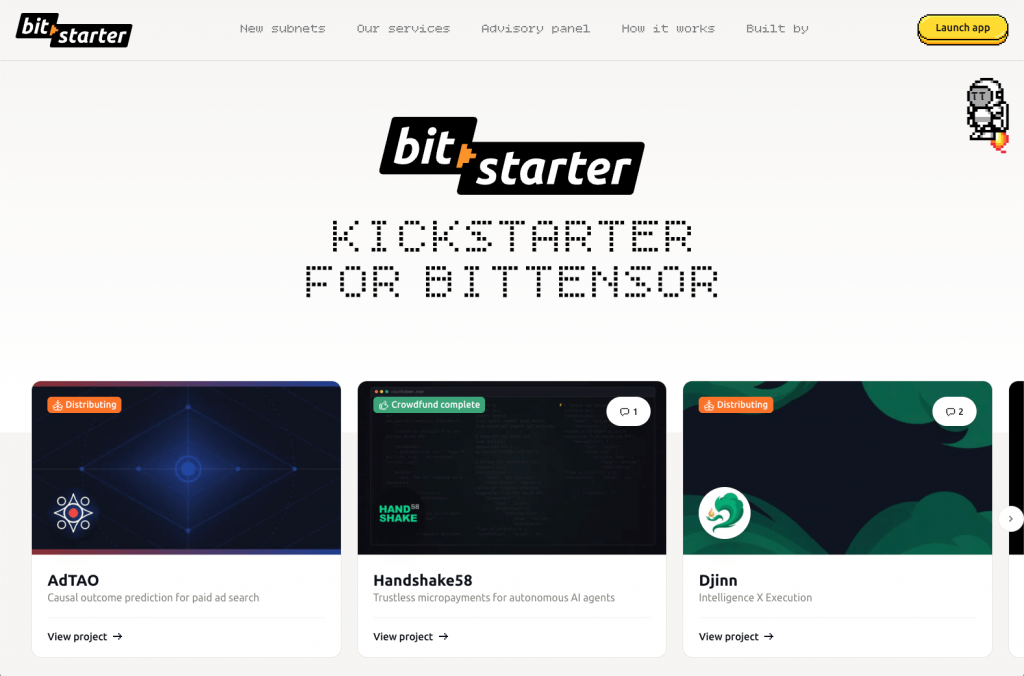
The clearest expression of this is Bitstarter, Bittensor’s first crowdfunding platform, designed and built by Avark. Bitstarter operates across two tracks, each addressing a different stage and type of builder.
The first is the Crowdloan Launchpad. Teams with a subnet idea pitch directly to the Bittensor community, making their case to TAO holders who can back projects they believe in. Funds lock in smart contracts built into Bittensor’s substrate layer and are released only when teams hit predefined milestones. If a project doesn’t reach its funding goal, TAO is returned to backers automatically. It’s a structure that protects the community while giving builders a clear path to launch with real financial support.
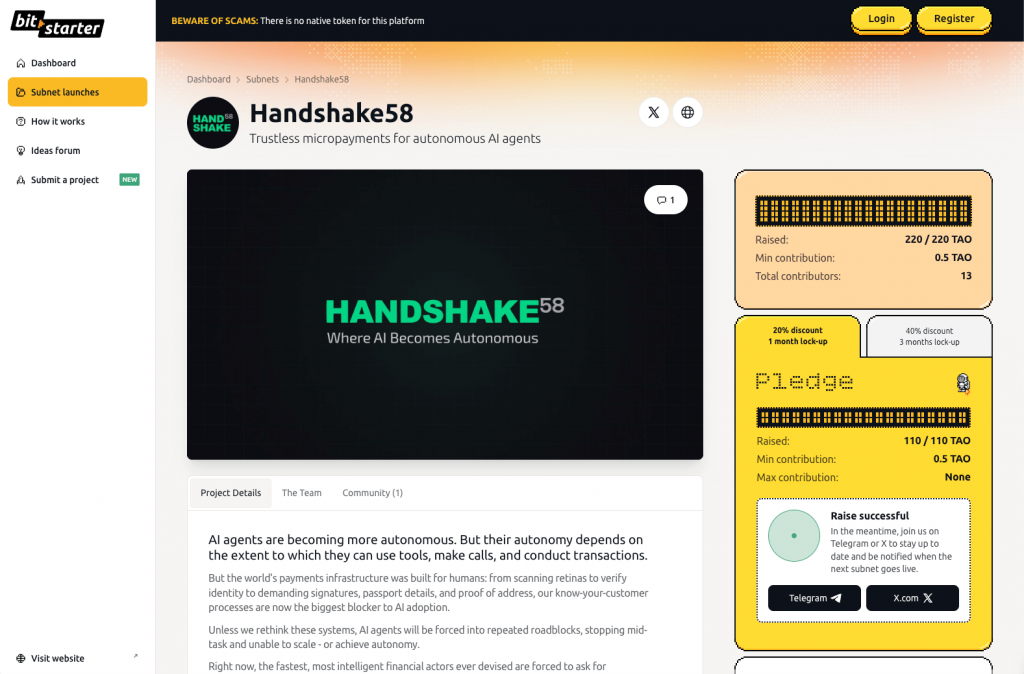
What makes Bitstarter particularly valuable for builders is its advisory panel. Every project is reviewed before it appears on the platform by a panel that includes Jacob Steeves (Bittensor founder), Cameron Fairchild (Latent Holdings co-founder), Jose Rios (BT Labs founder), Max Sebti (Score Technologies co-founder), Rob Greer (Stillcore Capital), and James Altucher. This pre-vetting gives backers confidence and gives builders credibility they’d otherwise spend months earning.
The broader funding environment reinforces the opportunity. Institutional inflows into the Bittensor ecosystem reached $620 million by early 2026, driven by NVIDIA’s involvement, Polychain’s backing, and the filing of spot TAO ETFs. Teams that demonstrate genuine utility and revenue potential, not just speculative narrative, are finding that capital is available from both community and institutional sources. The challenge isn’t raising money. It’s proving your subnet deserves it.
Conferences and Ecosystem Events: Building in Public
In a network defined by open competition and public accountability, showing up matters. Bittensor’s ecosystem events aren’t peripheral marketing. They’re where reputations are built, partnerships form, and the community decides who to take seriously.
The flagship event is Exploit Summit, Bittensor’s breakthrough conference, scheduled for September 28-29, 2026 in Montreal, Canada. Designed and built by Avark, Exploit brings together the ecosystem and beyond for two days of debates, demos, and workshops centred on Bittensor’s core concept: game-theoretic competitive design.
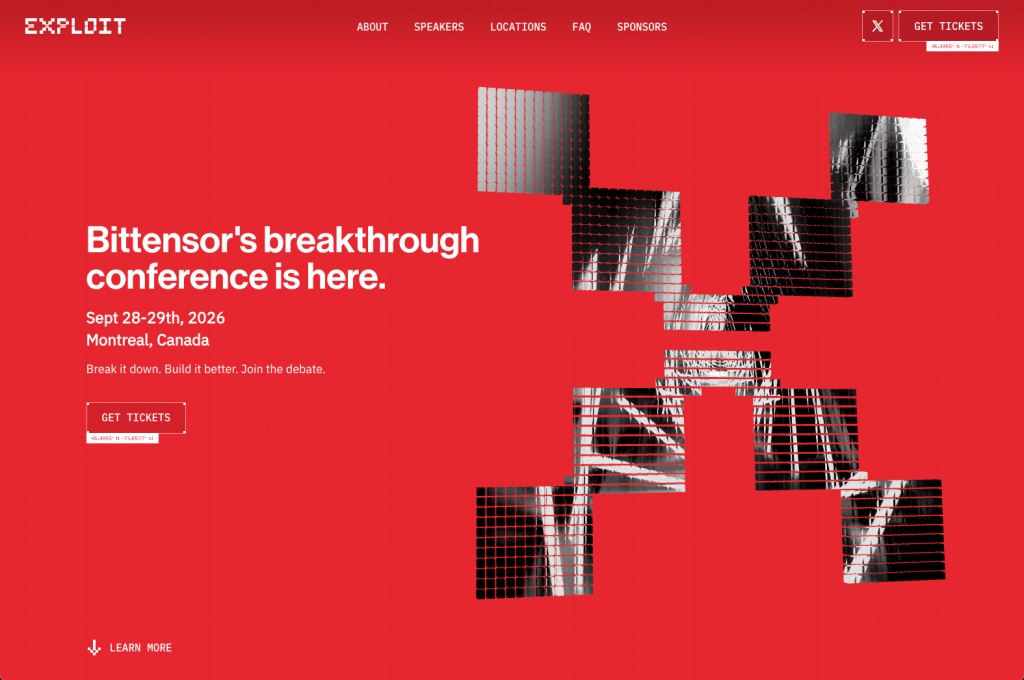
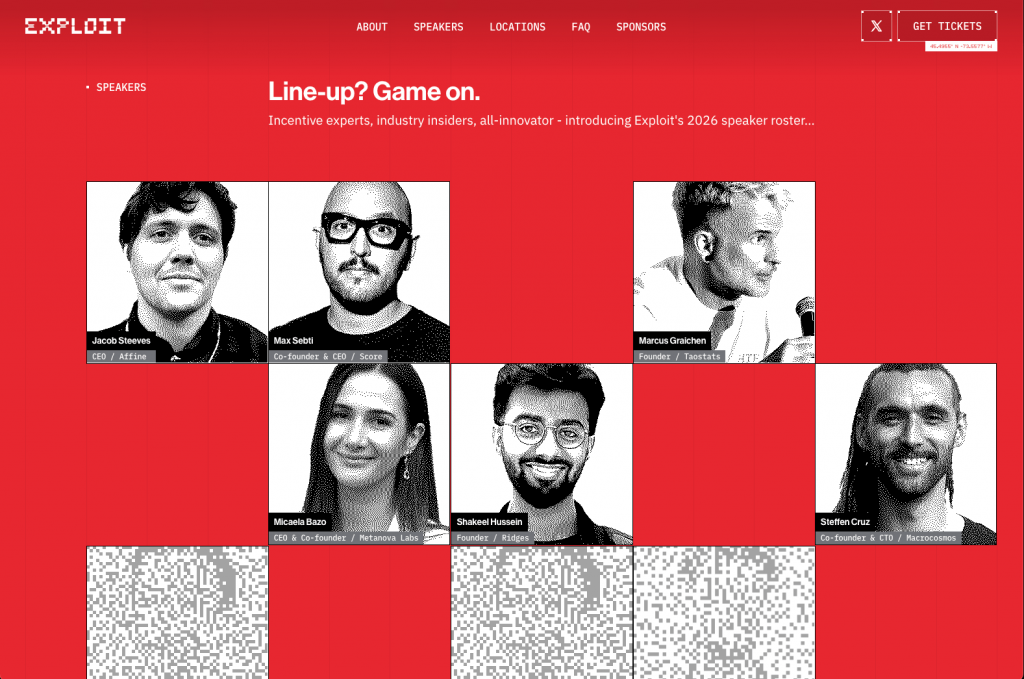
The speaker roster reflects the ecosystem’s depth. Jacob Steeves, Bittensor’s founder and now CEO of Affine, headlines alongside Max Sebti of Score Technologies, Marcus Graichen of Taostats, Micaela Bazo of Metanova Labs (running the world’s first decentralized drug discovery platform on Subnet 68), and Shakeel Hussein of Ridges (Subnet 62, building autonomous software developers with a 96.3% Polyglot Python Benchmark score). Topics span adversarial machine learning, incentive design, distributed compute infrastructure, and the open-source vs. proprietary debate that runs through every decision in the space.
For builders, the value of ecosystem events goes beyond content. Conferences like Exploit are where you meet validators who might support your subnet, miners evaluating where to allocate compute, investors doing due diligence on ecosystem bets, and potential collaborators whose technical skills complement your own. They’re where you develop market intelligence, learning what’s working, what’s failing, and where the gaps are before committing your own resources. And in a network where reputation matters as much as code quality, being present and engaged signals the kind of commitment the community looks for.
For any team serious about building on the network, attending and participating in these events isn’t optional overhead. It’s a core component of your go-to-market strategy.
Design, UX, and Branding for Bittensor Projects
In an ecosystem where 128+ subnets compete for the same pool of stakers, miners, and users, the projects that look and feel professional have a material advantage. Design isn’t decoration in Bittensor. It’s a trust signal.
The UX challenge is genuinely unique. Bittensor projects must communicate complex concepts like subnets, staking mechanics, Alpha tokens, incentive mechanisms, and emission flows to audiences that range from technical ML researchers to crypto-native investors to enterprise procurement teams evaluating decentralized alternatives to AWS. A staking interface that confuses retail users or a landing page that fails to convey technical credibility can cost a subnet the community support it needs to survive.
Good Bittensor design starts with clarity over complexity. The game-theoretic mechanics that make the network interesting also make it intimidating to newcomers. Translating those mechanics into interfaces that build understanding and trust, rather than overwhelm, is the core challenge. Community-facing products like launchpads, dashboards, staking interfaces, and subnet explorer tools need to onboard users without friction while maintaining the technical depth that power users expect.
Brand differentiation matters here more than in most ecosystems. When every subnet is competing for the same TAO, visual identity and design quality signal legitimacy. A polished, well-designed product tells stakers and miners that the team behind it is serious, funded, and likely to be around in six months. A generic or poorly designed product raises the opposite question.
This is the lens through which Avark approaches Bittensor projects. Having designed and built both Exploit Summit and Bitstarter, two of the ecosystem’s most visible properties, Avark brings Bittensor knowledge alongside six years of web3 design experience across over 100 blockchain projects. That combination of ecosystem understanding and design craft translates to faster timelines, fewer revisions, and products that resonate with the community from day one.
Avark’s approach is research-driven, senior-led, and built for momentum. Every project is handled by experienced operators with direct web3 experience, and the studio’s compact structure means decisions are made by the people doing the work, not filtered through unnecessary layers. For Bittensor teams operating on tight timelines in a competitive environment, that efficiency matters.
Step-by-Step: From Idea to Live Subnet
Bringing together the key themes of this guide, here is the practical sequence for taking a Bittensor project from concept to launch.
1. Research the ecosystem. Study existing subnets, understand what’s generating revenue, and identify the gaps. Resources like Taostats, tao.app, Tao.Guide, and the official Bittensor documentation are essential starting points. Know the competitive landscape before you commit.
2. Define your AI objective. Identify a clear, measurable task your subnet will incentivize. The strongest subnets solve problems that enterprises currently pay centralized providers to handle: compute, inference, data processing, model training. If you can articulate why a decentralized approach is cheaper, faster, or more transparent than the centralized alternative, you have a viable thesis.
3. Design your incentive mechanism. Create scoring rules that reward quality and resist gaming. This is the hardest intellectual challenge in subnet creation, and it’s worth investing serious time and talent here. A weak incentive mechanism will attract low-quality miners, repel validators, and ultimately get your subnet pruned.
4. Build your brand and product. Invest in design, UX, and branding early. In an ecosystem this competitive, first impressions determine whether stakers and miners give your subnet a chance. Working with a specialist web3 agency like Avark can compress this phase significantly while ensuring the result meets the ecosystem’s standards.
5. Test locally, then on testchain. Deploy in isolation first. The Bittensor SDK and documentation provide clear guidance for running local instances, and testchain deployment lets you validate your incentive logic with test TAO before any real assets are at stake. This phased approach catches bugs and refines your scoring before it matters.
6. Secure funding. Use platforms like Bitstarter to pitch to the community, lock funding in milestone-based smart contracts, and benefit from advisory review. Community-backed funding aligns your incentives with your earliest supporters and provides credibility that accelerates everything else.
7. Launch on mainnet. Register your subnet with the required TAO deposit, attract your first miners and validators, and begin the competitive process. Your incentive mechanism will be tested in real conditions from this point forward.
8. Go to market. Attend ecosystem events like Exploit Summit, build partnerships with validators and application developers, develop BD capabilities, and generate real revenue through API sales, subscriptions, or enterprise contracts. The subnets that last are the ones that build businesses, not just technology.
9. Iterate continuously. Monitor performance, respond to community feedback, adjust incentive parameters, and refine your offering. Bittensor’s competitive dynamics mean that standing still is falling behind.
Building the Future of Decentralized AI
Bittensor represents something different from the usual blockchain narrative. It’s not a network optimised for financial transactions, NFTs, or DeFi primitives. It’s a network where value is tied directly to the quality of intelligence produced, where the token economics, the competitive structure, and the community incentives all align around making AI better, cheaper, and more accessible.
For builders, the opportunity is substantial but demanding. The subnet ecosystem rewards teams that combine strong engineering with clear design, community engagement, credible funding, and a plan to generate real revenue. The projects that survive Bittensor’s competitive dynamics are the ones that treat every dimension of the launch, from incentive mechanism to brand identity to go-to-market strategy, with equal seriousness.
Avark is the only web3 design agency with proven Bittensor ecosystem builds, having designed and developed both Exploit Summit and Bitstarter alongside six years of experience across more than 100 blockchain projects. Whether you’re an ML team exploring your first subnet, an existing project looking to rebrand or rebuild, or a founder planning a launch on Bitstarter, start a conversation and we’ll help you move from idea to adoption without friction.
Frequently Asked Questions
What is Bittensor and how does it work?
Bittensor is a decentralized blockchain network that creates an open marketplace for machine intelligence. It operates through specialized subnets, each focused on a specific AI task, where miners produce AI outputs and validators score their quality. Participants are rewarded with TAO tokens based on performance, creating a competitive, merit-based system for AI development.
How do I start building on Bittensor?
Start by studying the existing subnet ecosystem, then define a clear AI objective for your subnet. Design an incentive mechanism, test locally using the Bittensor SDK, deploy to testchain, secure funding through platforms like Bitstarter, and launch on mainnet. Working with an experienced web3 design and development partner like Avark can significantly accelerate the process.
What is a Bittensor subnet?
A Bittensor subnet is an incentive-based competition marketplace that produces a specific type of AI commodity. Each subnet has its own miners, validators, incentive rules, and, since the introduction of dTAO in February 2025, its own Alpha token and liquidity pool. Subnets compete for TAO emissions based on market-driven staking.
How much does it cost to create a subnet on Bittensor?
Creating a subnet on Bittensor’s mainnet requires a TAO deposit that varies based on current network demand. The TAO is not permanently burned and can be recovered if the subnet is deregistered. With only 128 active subnet slots (expanding to 256), registration is competitive, and underperforming subnets can be replaced by new entrants willing to pay the current registration cost.
What is Bitstarter?
Bitstarter is Bittensor’s first crowdfunding platform, designed and built by Avark. It offers two tracks: a Crowdloan Launchpad where teams pitch to TAO holders and receive milestone-based funding secured by on-chain smart contracts, and a Machine Learning Incubator for teams backed by Bittensor founder Jacob Steeves with full technical and commercial support.
What is Exploit Summit?
Exploit Summit is Bittensor’s flagship conference, taking place September 28-29, 2026 in Montreal, Canada. Designed and built by Avark, it brings together subnet teams, validators, miners, investors, and ecosystem leaders for two days of debates, demos, and workshops focused on game-theoretic AI and incentive design.
Why does design matter for Bittensor projects?
Bittensor’s subnet ecosystem is intensely competitive, with 128+ projects competing for emissions, stakers, and users. Professional design, UX, and branding signal legitimacy, reduce user friction, and differentiate your project in a crowded market. In an ecosystem where community trust directly determines funding and emissions, looking credible isn’t vanity. It’s survival.